This is the condensed write-up of the LEDBrick project I posted to Reef2Reef in April 2016, summarizing about a year of work for the forum community. The full design-log versions are the earlier LEDBrick posts here.
It all started with this concept — a squarish shaped LED “brick” in a pendant form. The mechanics were based around a 4.6in HeatsinkUSA serrated stock and an 80mm fan.

The LED arrangement packs eight channels: 4 Rebel UV, 6 Cree XP-G2 white, 6 Cree XP-E blue, 6 Osram Oslon Square deep blue, 4 Osram SSL hyper-red, 4 Rebel PC-amber, 4 Rebel cyan, and 4 Cree XP-E green.
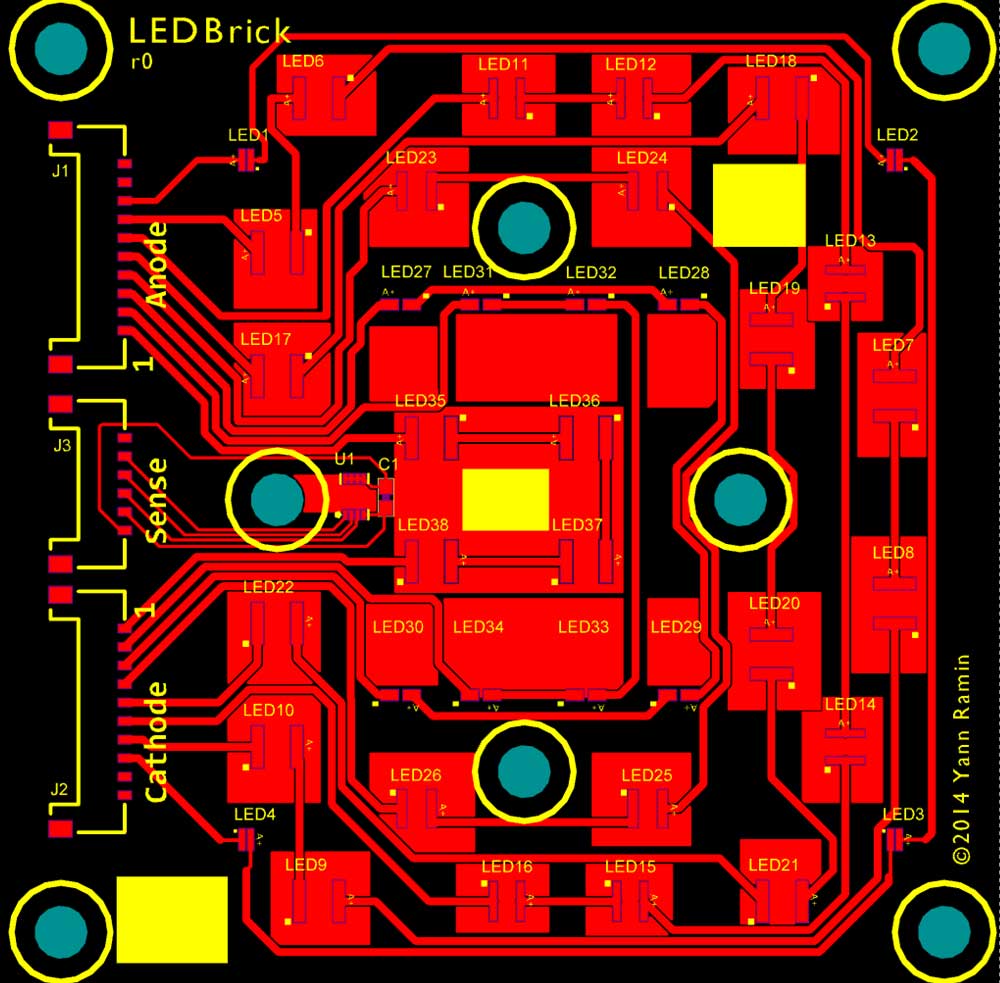
Why so many LEDs? Lower currents, higher efficiency, and future flexibility — this was never a build-cost-efficient fixture. The downside of the density is that secondary optics won’t fit, so these run close to the water. Also on the board: an MCP9808 I²C temperature sensor grounded through a mounting screw for a real thermal path, and Molex PicoLock connectors throughout.
Building the boards
I assembled the emitter boards with a $10 Kapton stencil from OSHStencil, solder paste, tweezers — and a Hamilton Beach skillet as the reflow oven, which works a treat for single-sided boards.
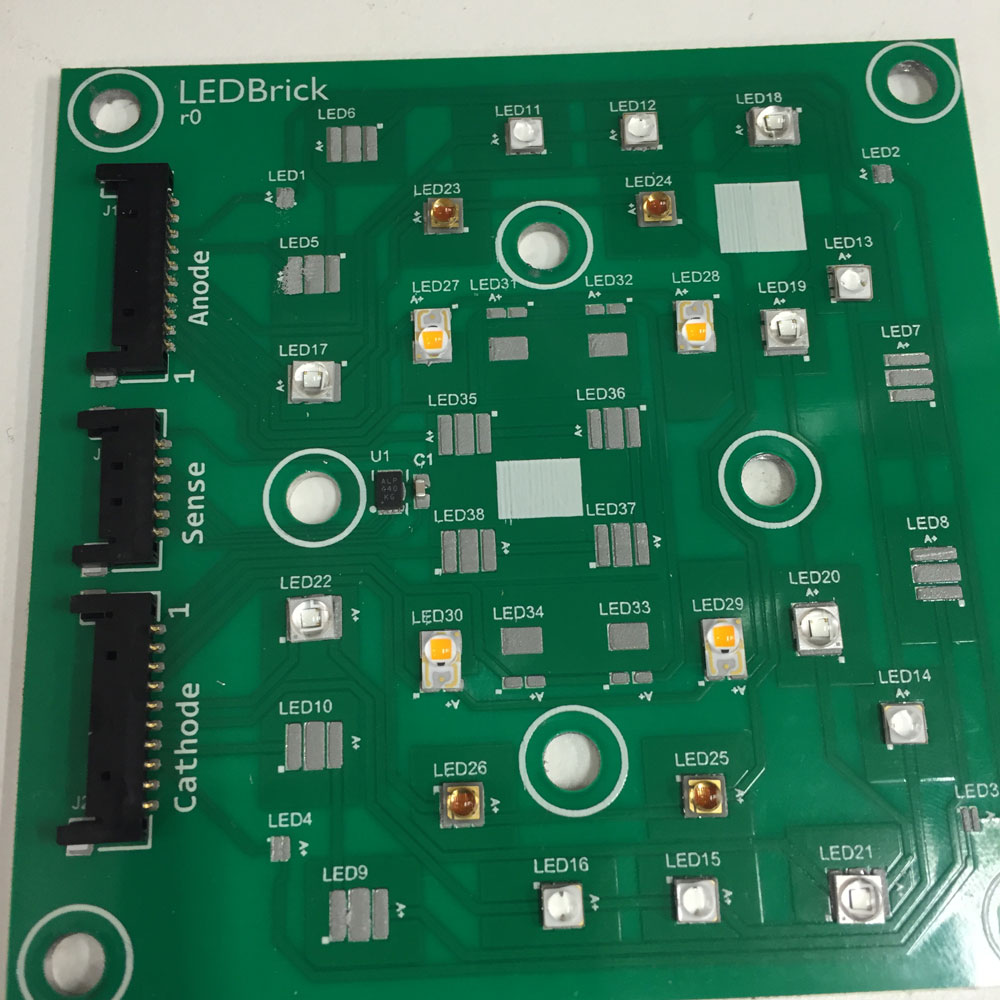
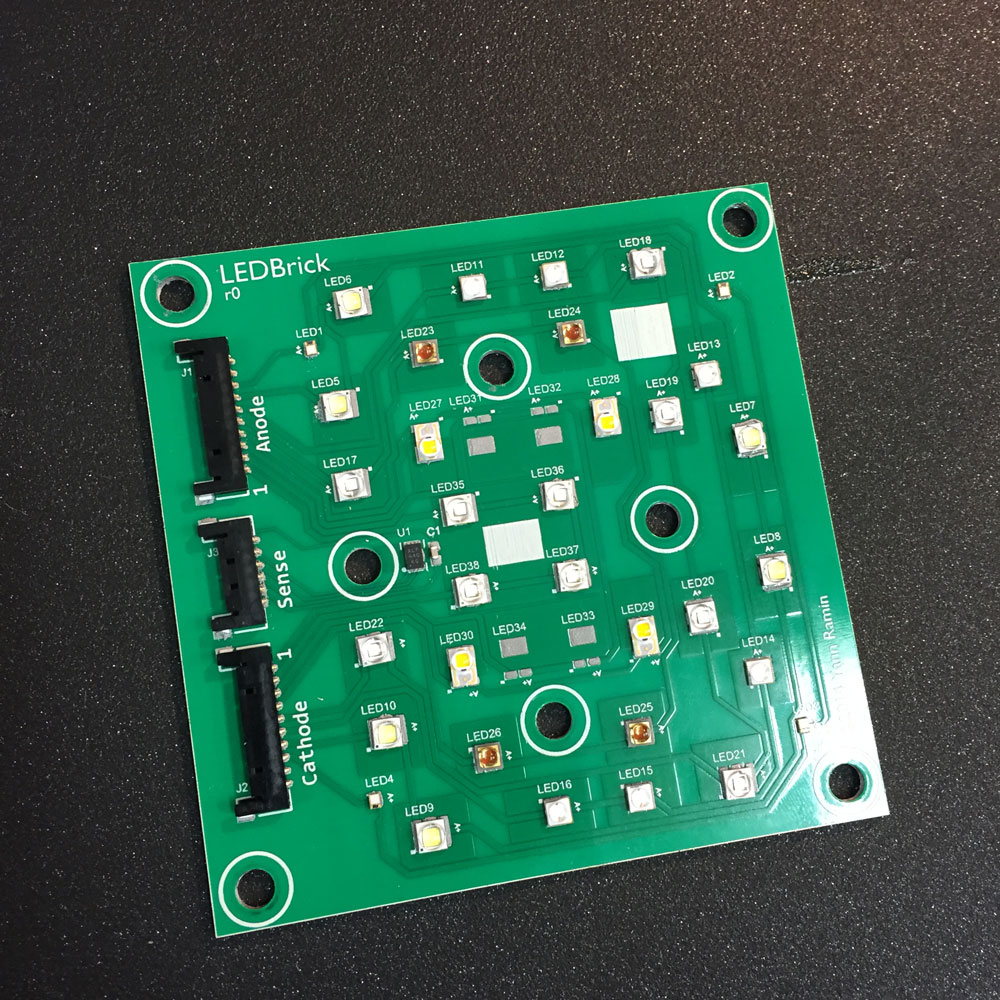
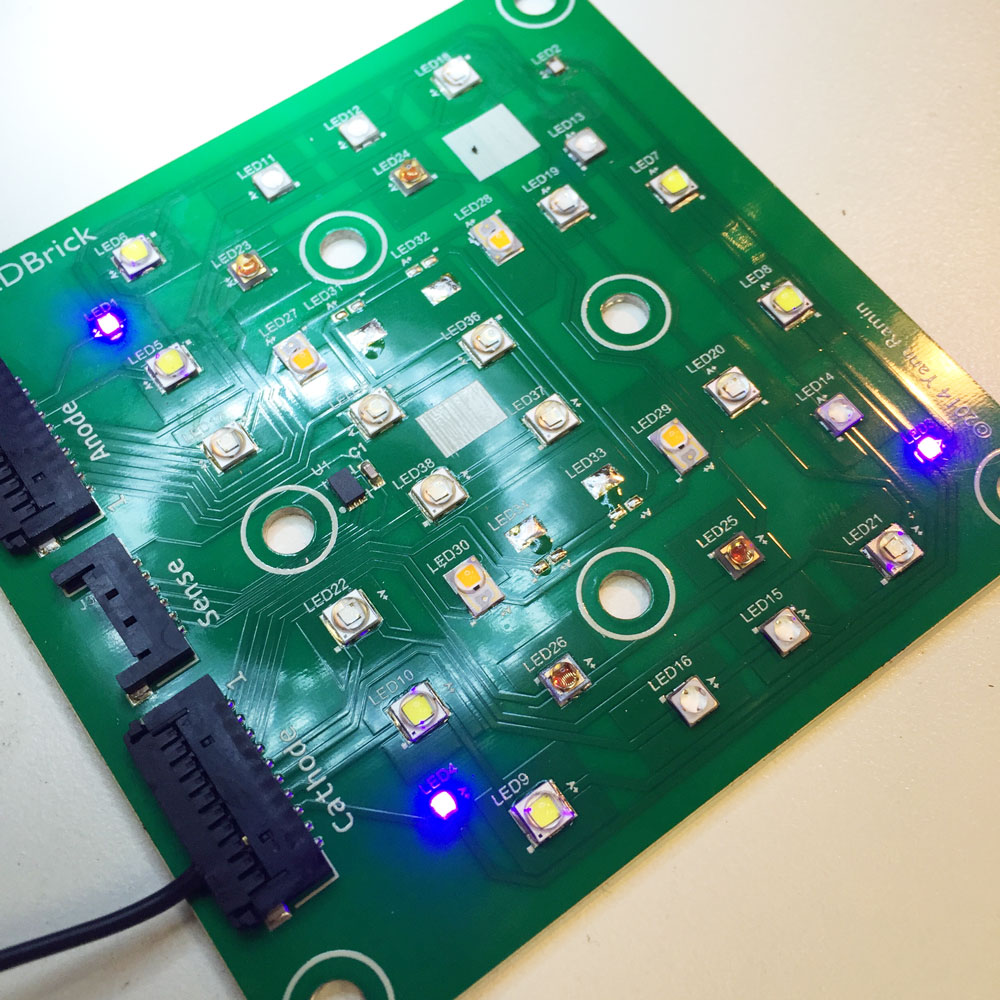
I tested each channel individually — here’s the violet channel:
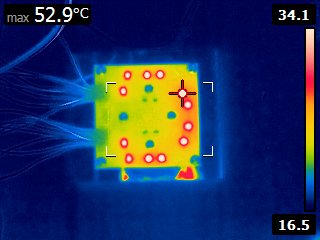
Thermal validation included FLIR imaging with three channels at 750mA and no fan, plus PAR readings at six inches:
Drivers
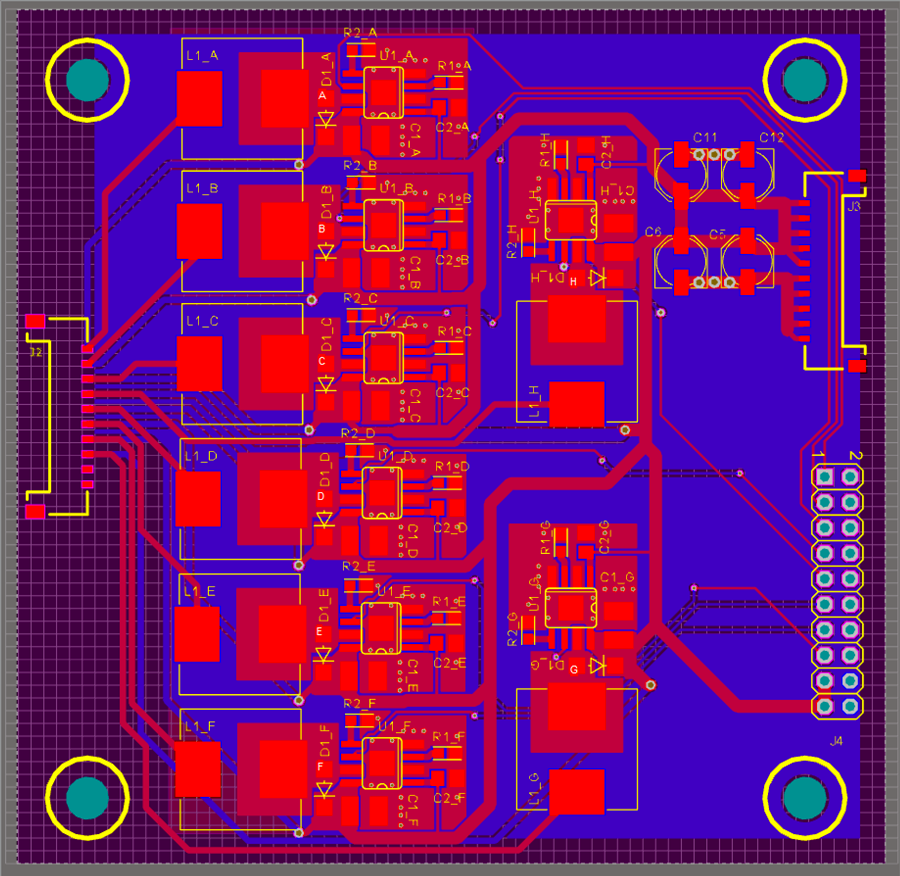
No way to fit 8 LDD drivers in the 80mm footprint, so I laid out my own 8-channel driver board on LM3414 ICs, with a 20-pin stacking connector breaking out the PWM signals:
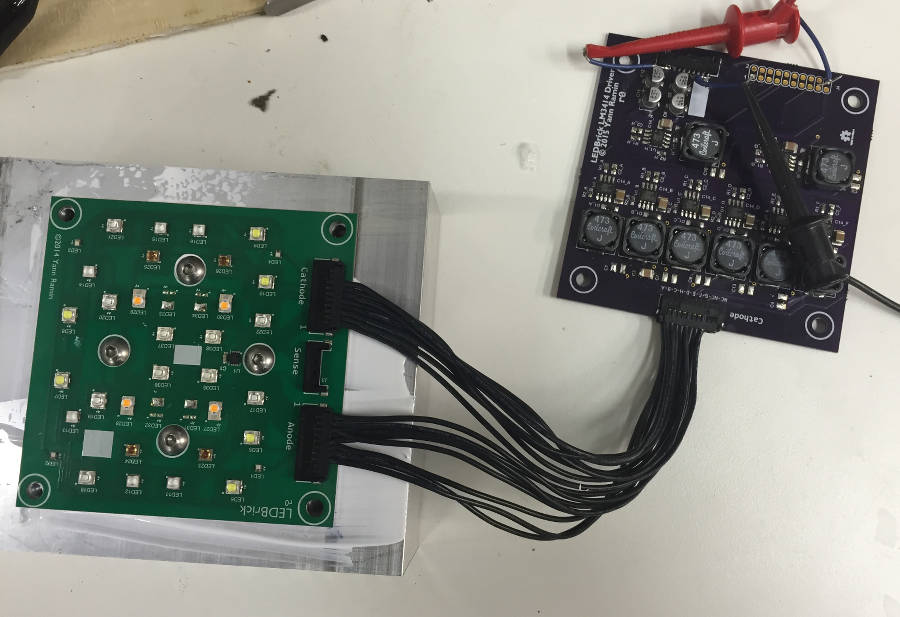
All eight channels crimped and hooked up, initially at 500mA per channel (blues and whites later bumped to 800mA — a single resistor swap):
Schematics, board files, and BOMs are on GitHub.
Control
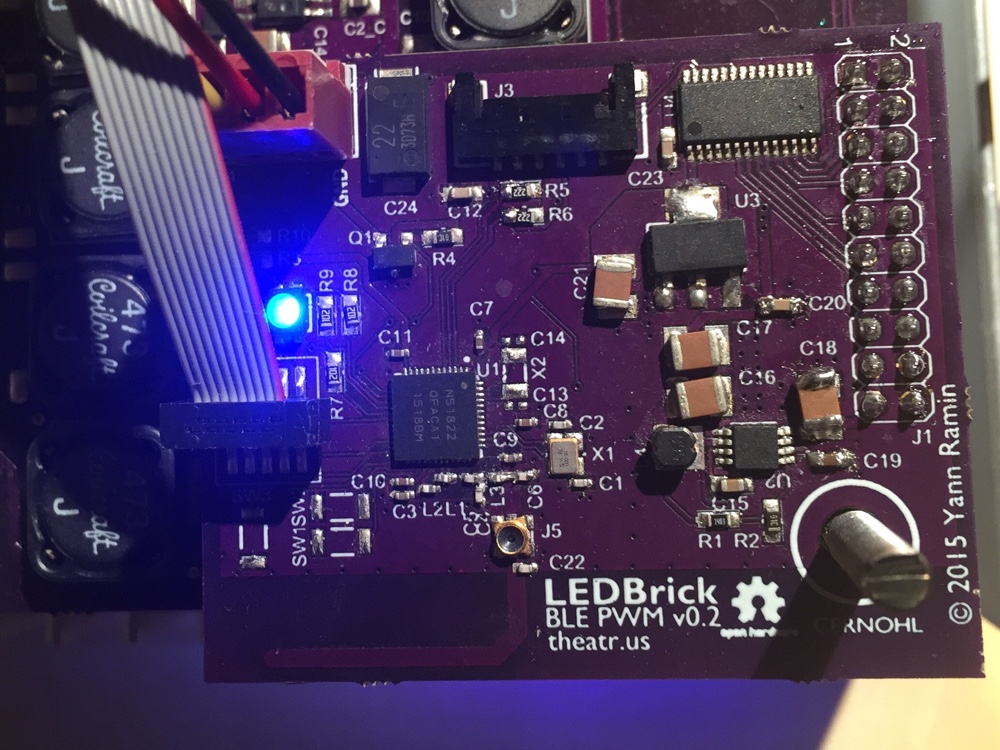
Several revisions in: a Bluetooth LE PWM controller — nRF51 Cortex-M0, 8 PWM dimming channels (16 possible), 24V input, and 12V fan control with PWM and tach readback — talking to a Raspberry Pi for schedules and monitoring.
The case
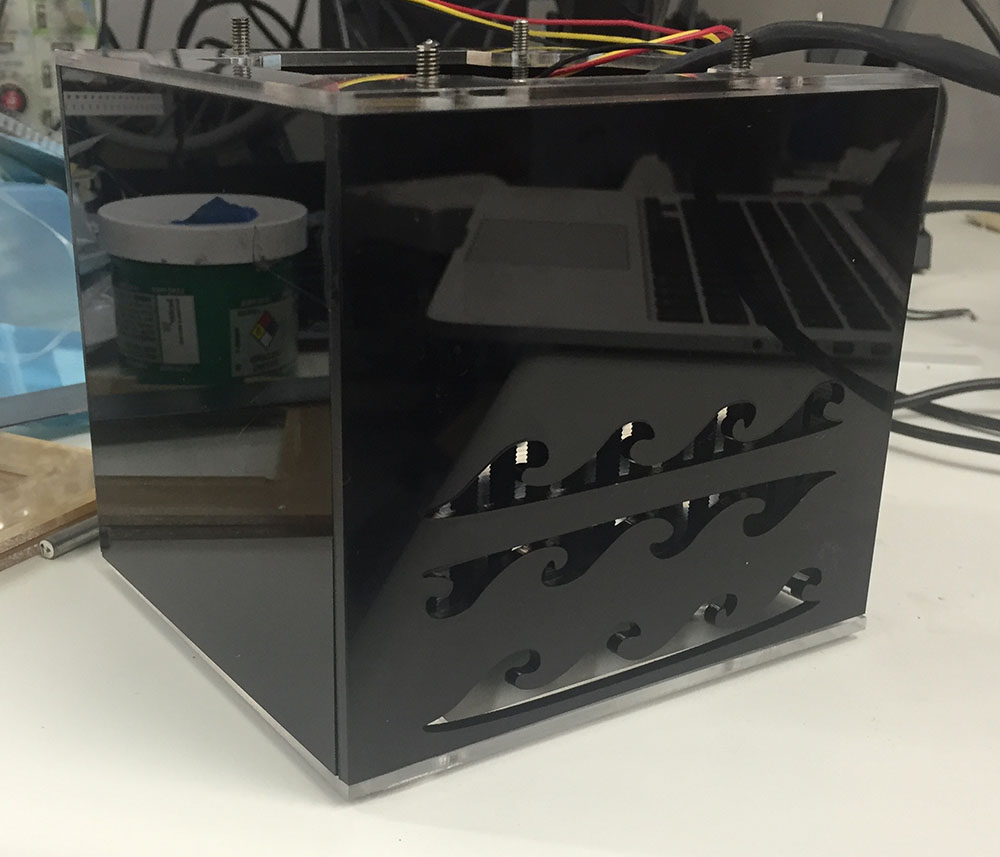
Laser-cut acrylic, on borrowed shop-cutter time. The first side panels had too many holes for the fan to do anything useful; an internal shroud fixed the recirculation, and the redesigned side panel got a neat wave.
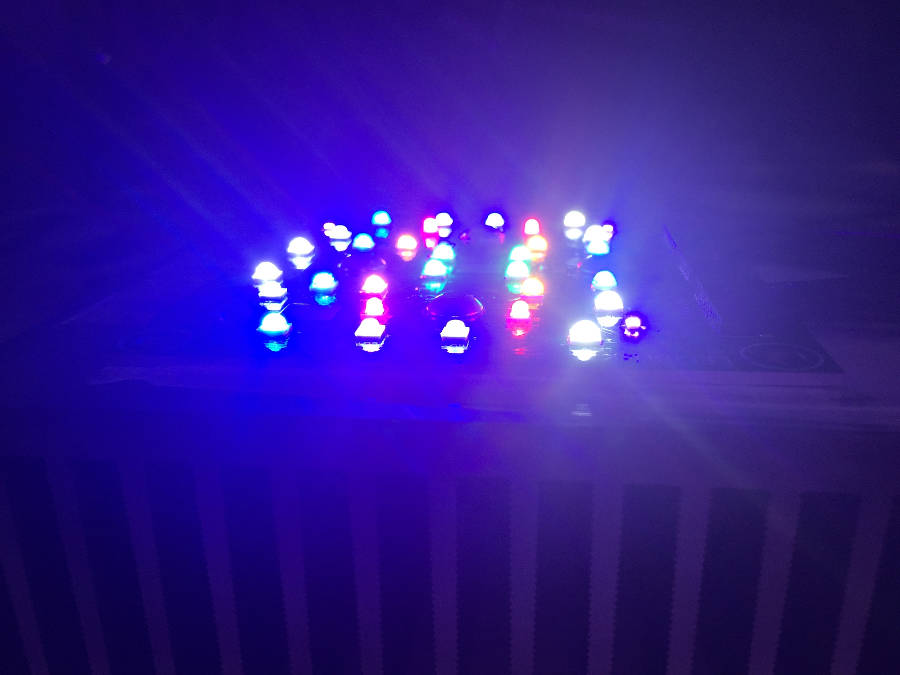
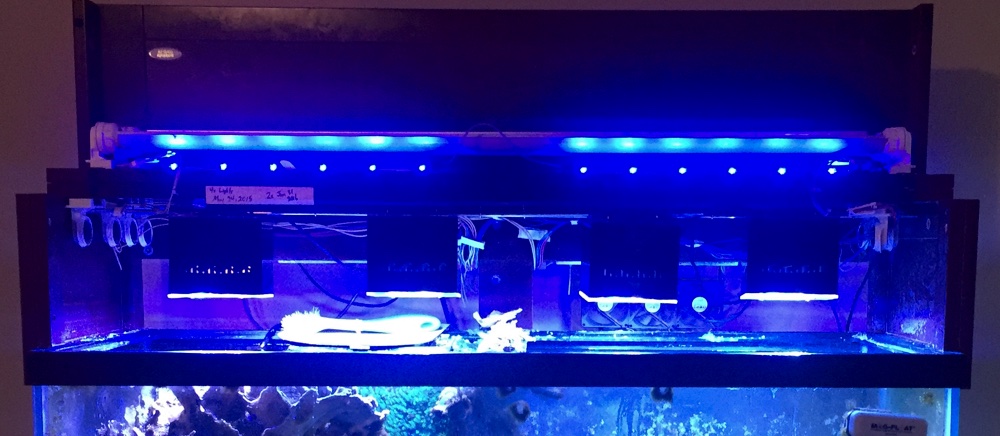
After several weeks of burn-in hanging in the garage, all three units went into production over the 90-gallon, scheduled from the Pi over Bluetooth:
Originally posted to the LEDBrick thread on Reef2Reef.