The LEDBrick+ story so far, combined from my updates to the Reef2Reef thread between September 2024 and October 2025.
September 2024 — introducing LEDBrick+
Remember this project? I’d been running these LEDs for what felt like a decade, with some replacements here and there and an LED board upgrade. I experimented with commercial LEDs on the nano tank… and I just don’t like the color rendering. I got weirdly spoiled by this mix of LEDs. Meanwhile, the original driver and Bluetooth PWM boards soldiered on with bodges — one running from a 12V adapter after salt damage burned out its fan DC/DC circuit — and the Raspberry Pi control never did get programming or an RTC. Time to modernize.
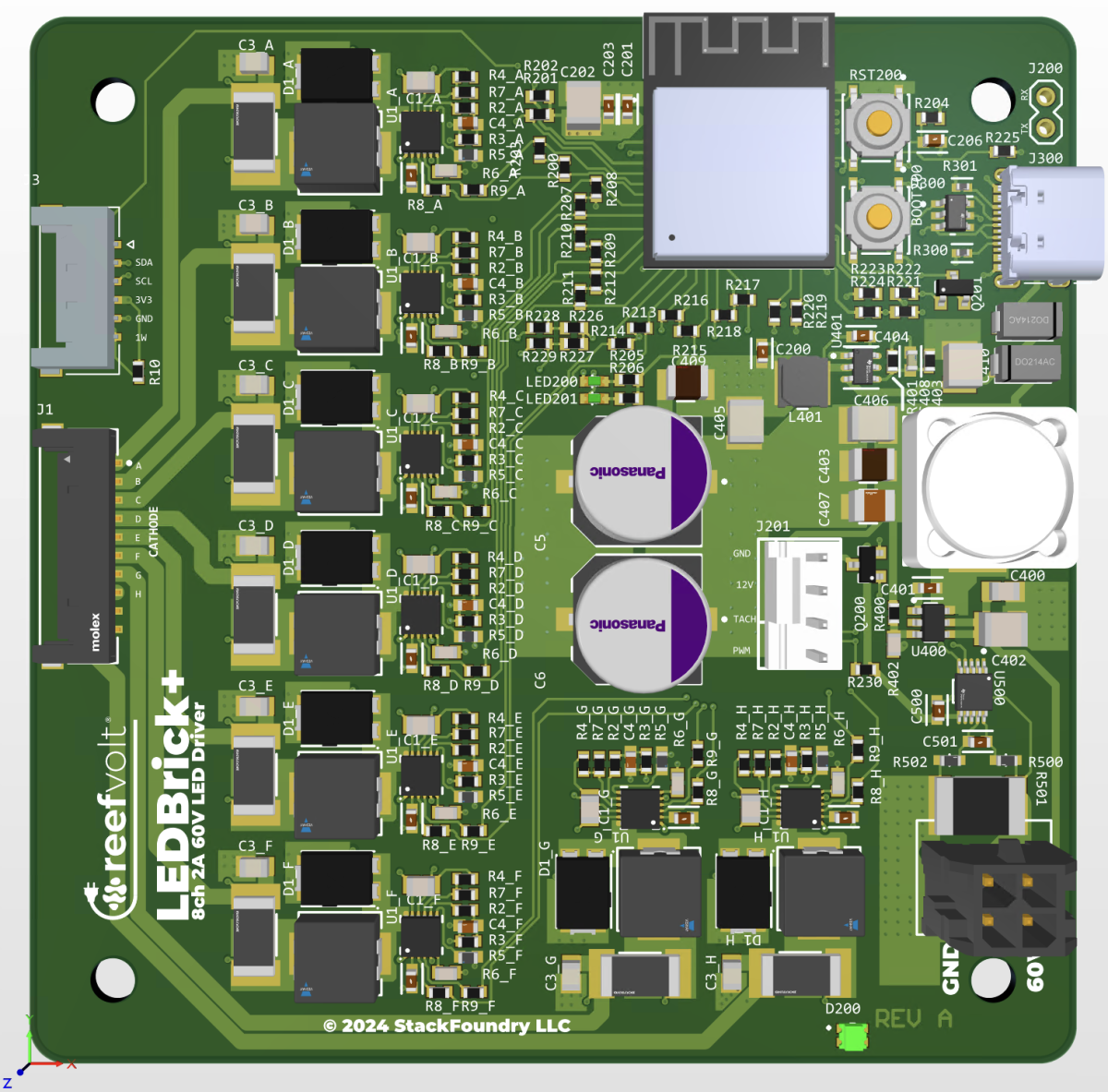
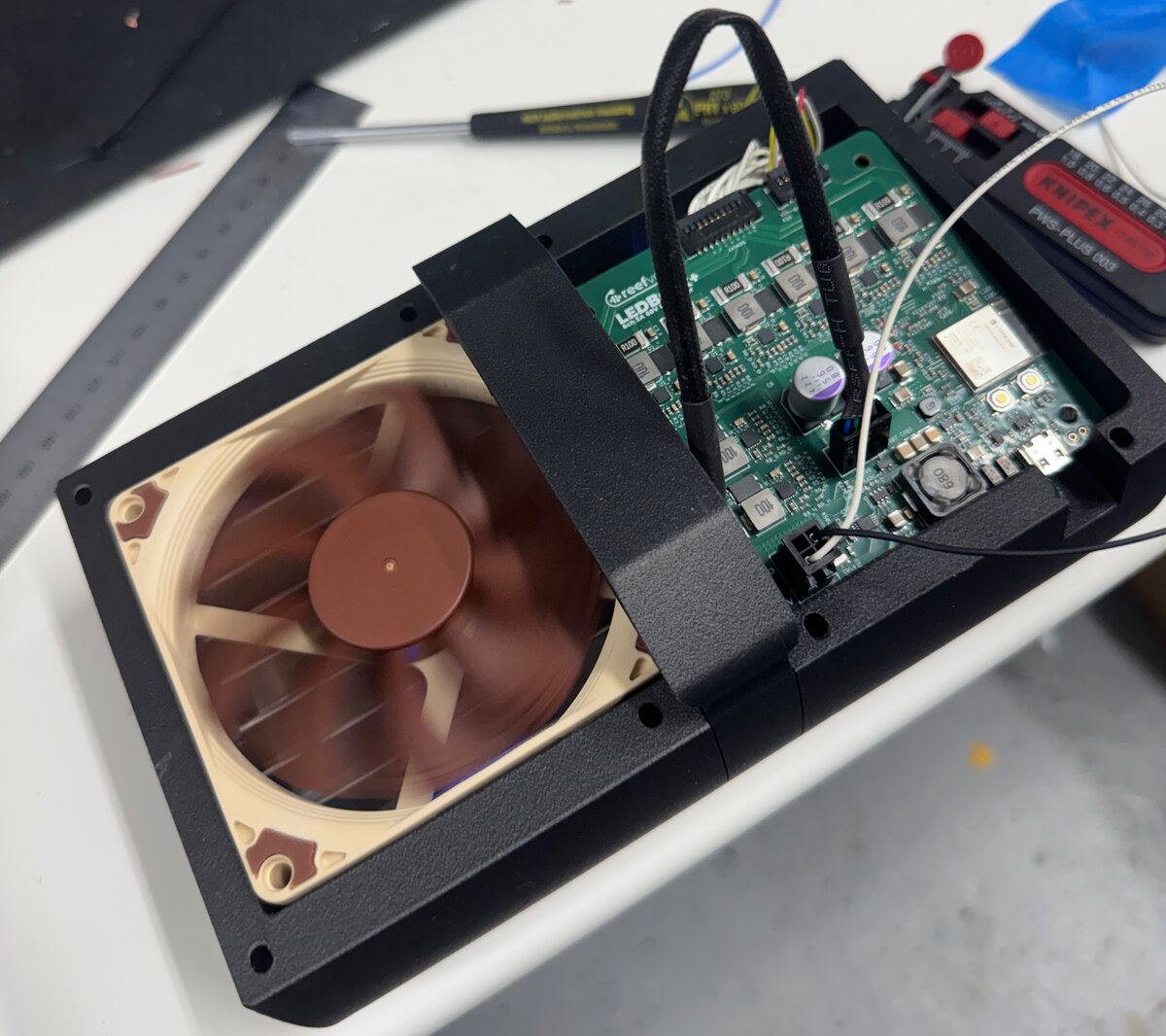
Introducing the LEDBrick+: an 8-channel LED driver with an on-board ESP32-S3 driving all 17 PWM channels (8 from LEDC, 9 from MCPWM). The TPS922053 driver scales to 2A per channel, and has a neat mode where a second PWM input regulates the current — so 1A LEDs, 700mA LEDs, whatever, fully programmable dimming on both axes. I kept the 80mm-fan footprint (now a proper 85×85mm instead of the odd 84×86mm), input voltage goes to 60V for bigger strings, the PicoLock connectors stay, the I²C channel to the LED carrier’s MCP9808 sensors stays — and an INA228 monitors the power input, because cost was no barrier.
September 2025 — validation, and software
personal_project_stack.pop()
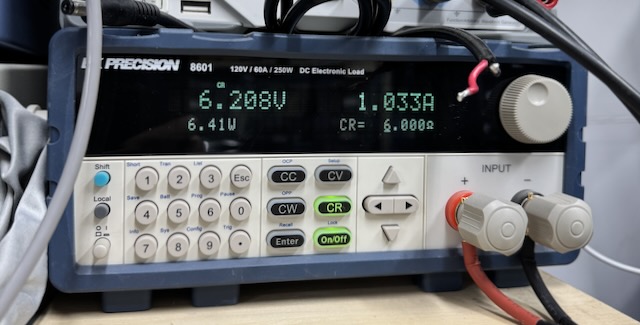
Hardware validation: all 8 channels tested on the DCBuddy 8-load bench — current control and PWM dimming both work well, along with fan PWM, tach readback, and current monitoring.
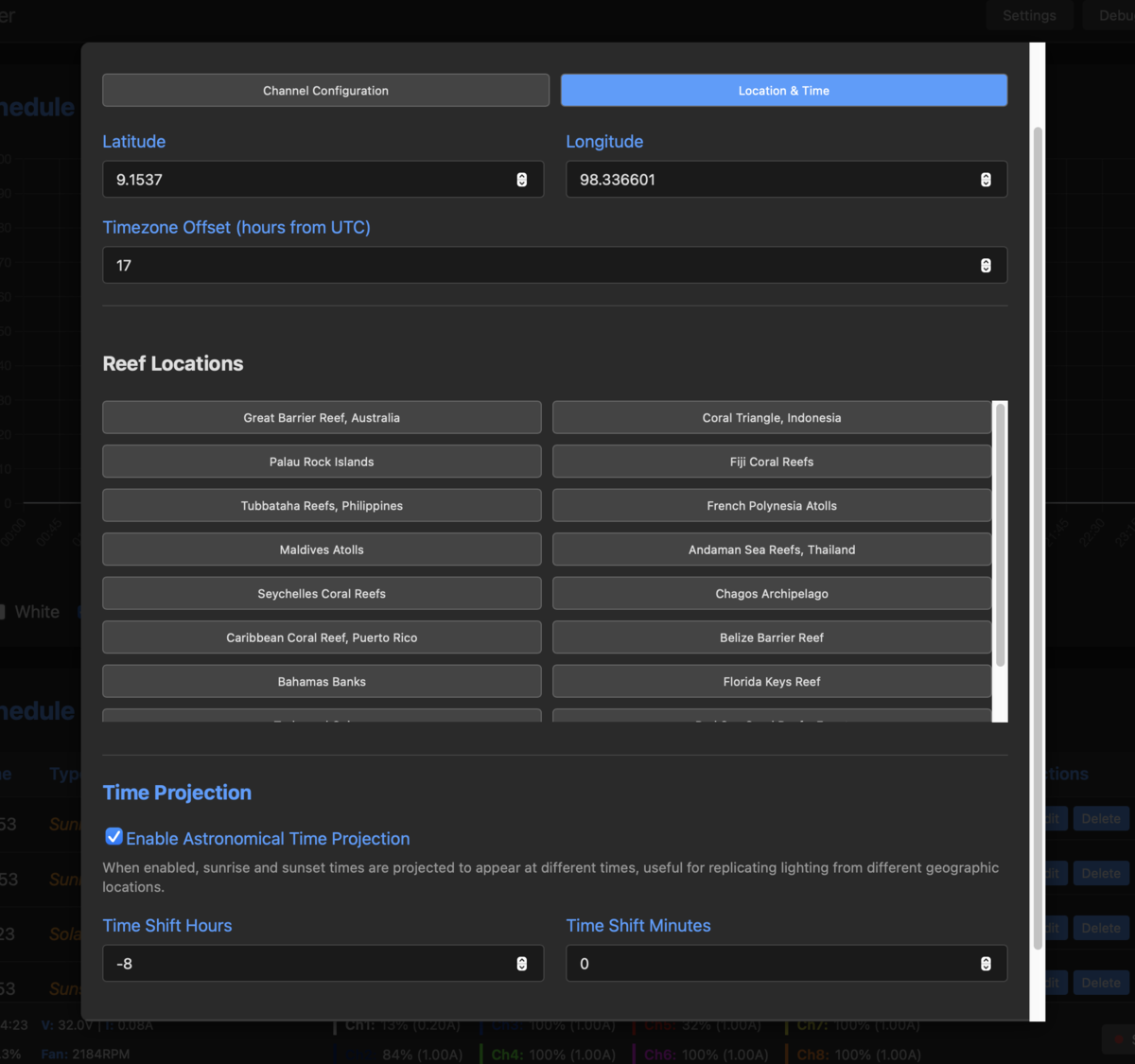
To run all 16+1 PWM channels on the ESP32-S3 I built a new ESPHome component: mcpwm_unified. And while I started with ESPHome (and am still using it), I’m writing custom components on top — including a custom LED scheduler with a React web frontend, embedded on the ESP32, doing astronomical schedules with offsets, moon phases, and more:
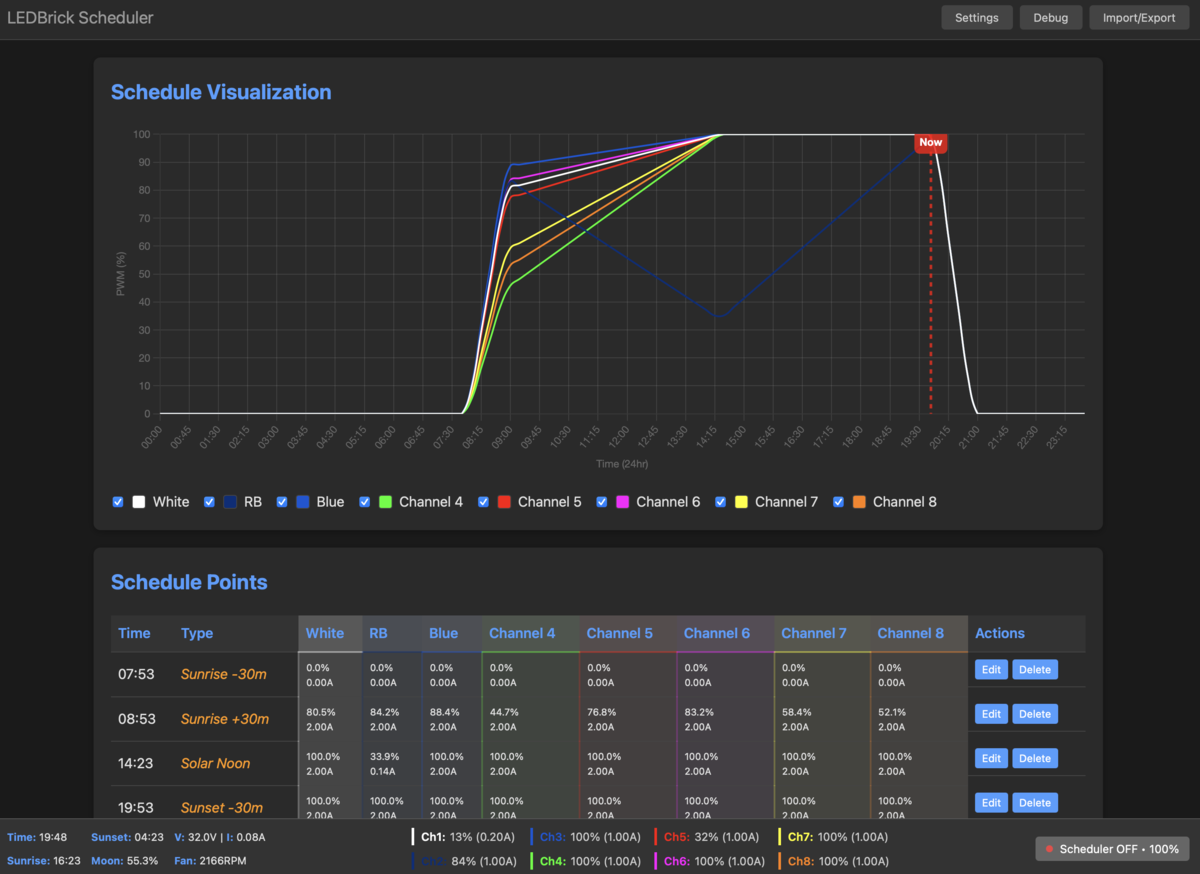
Still to come: multi-unit syncing, after temperature safety and fan control land.
October 2025 — metal and power
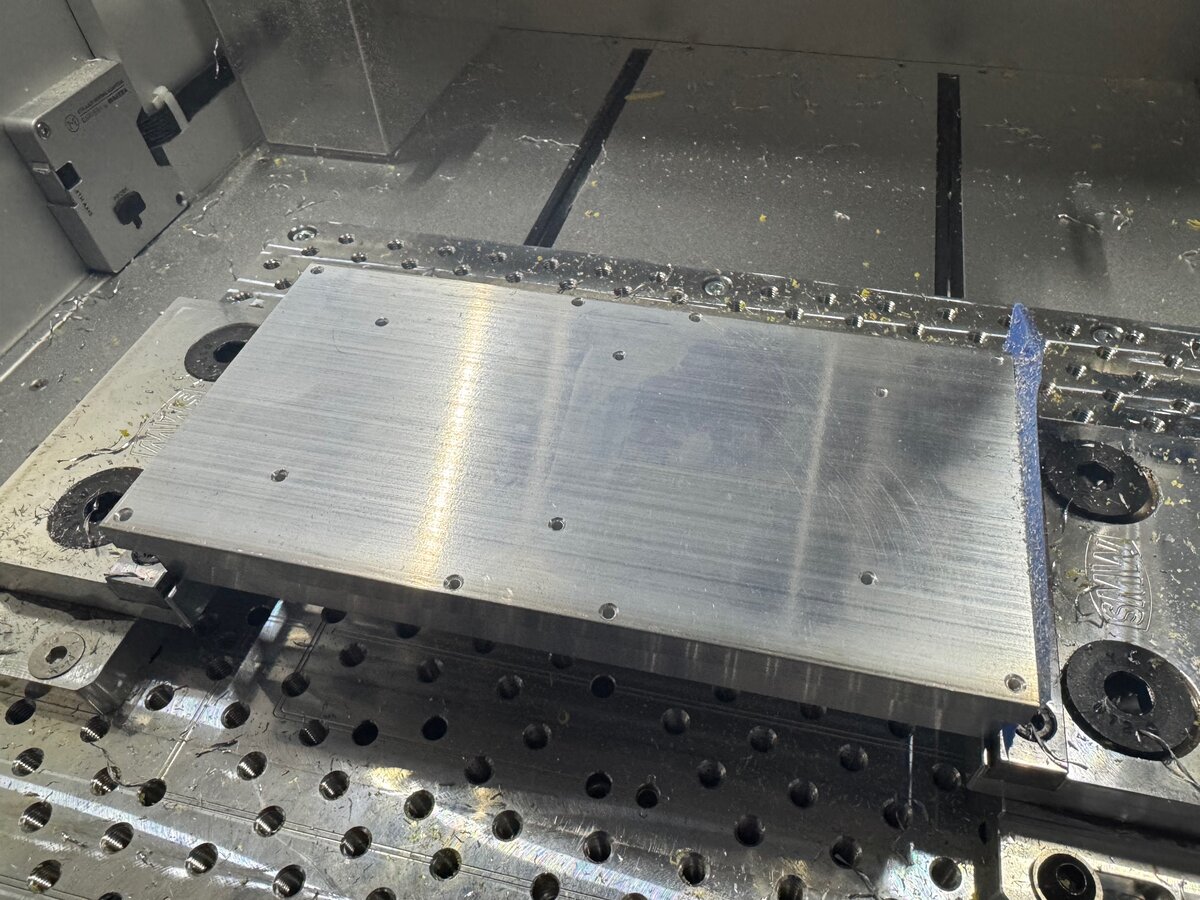
- Heatsink drilled and chamfered in the Carvera (hand-tapped 14× M3 this time; the CAM to treadmill that on the Carvera is written, because that sucked).
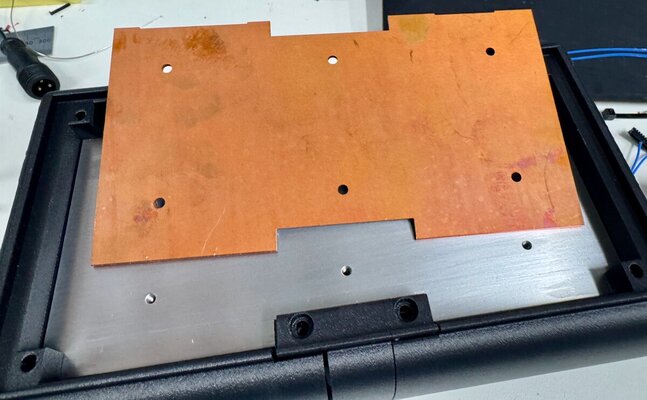
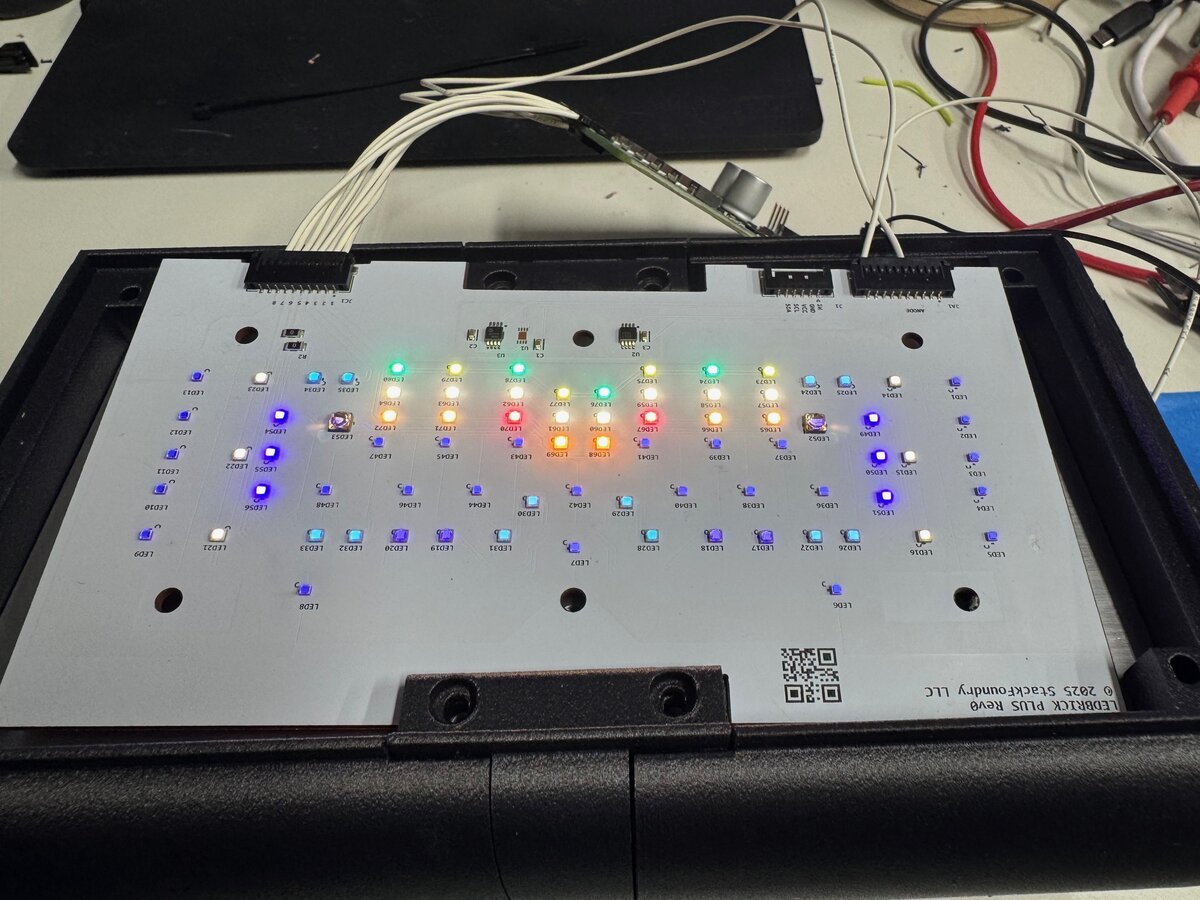
- PCBs ordered from JLCPCB on copper core. Expensive, but why not.
- New enclosure printed in PC-CF — very nice feeling.
- Power testing: pushing all channels at max is over 200W, which is silly and not what I’d do — but the headroom is there, and the L1RX emitters haven’t even been pushed past 1A of their 1.6A yet.
Combined from the Reef2Reef updates of Sept 2024, Sept 2025, and Oct 2025.