After the original LEDBrick write-up, mid-2016 turned into a run of driver and emitter experiments — posted to the Reef2Reef thread between May and August 2016. These designs were the seeds of the later BlueAcro / AcroIQ line.
A budget driver: the RT8471
Due to some community prompting, I worked up a quick driver design based on the RichTek RT8471 — a standard 1A constant-current buck converter at a very low price (50 cents if you buy 10). Step one was a calculator sheet from the datasheet parameters to validate inductor choices; then one channel laid out:
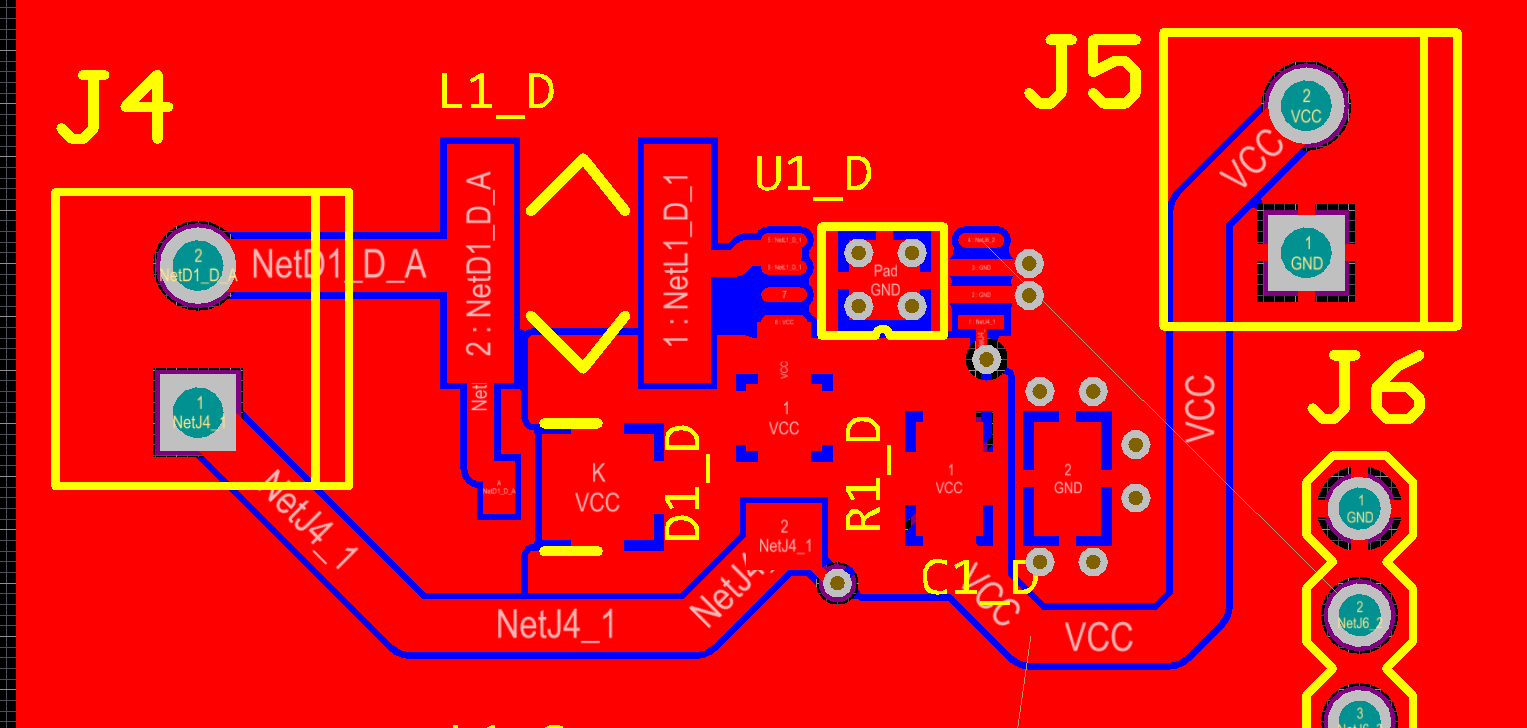
Layout lessons for anyone following along: a lot of switching current moves between the diode, inductor, Vcc, and SW→GND nodes — connect them with lots of copper kept very close, lest the traces act as unwanted inductors and radiators. Pick an inductor with suitable saturation current, and a diode rated for roughly 2× steady-state current with voltage margin above max Vin.
Rev 3 of the 1.5″×2″ four-channel board fixed one major schematic error (the recirculating diode wasn’t on the switch node) and added a <$1 PIC16F18323 to drive the PWM pins, read a 0–10V input bank, and expose an I²C header so a chain of boards can hang off one Arduino:
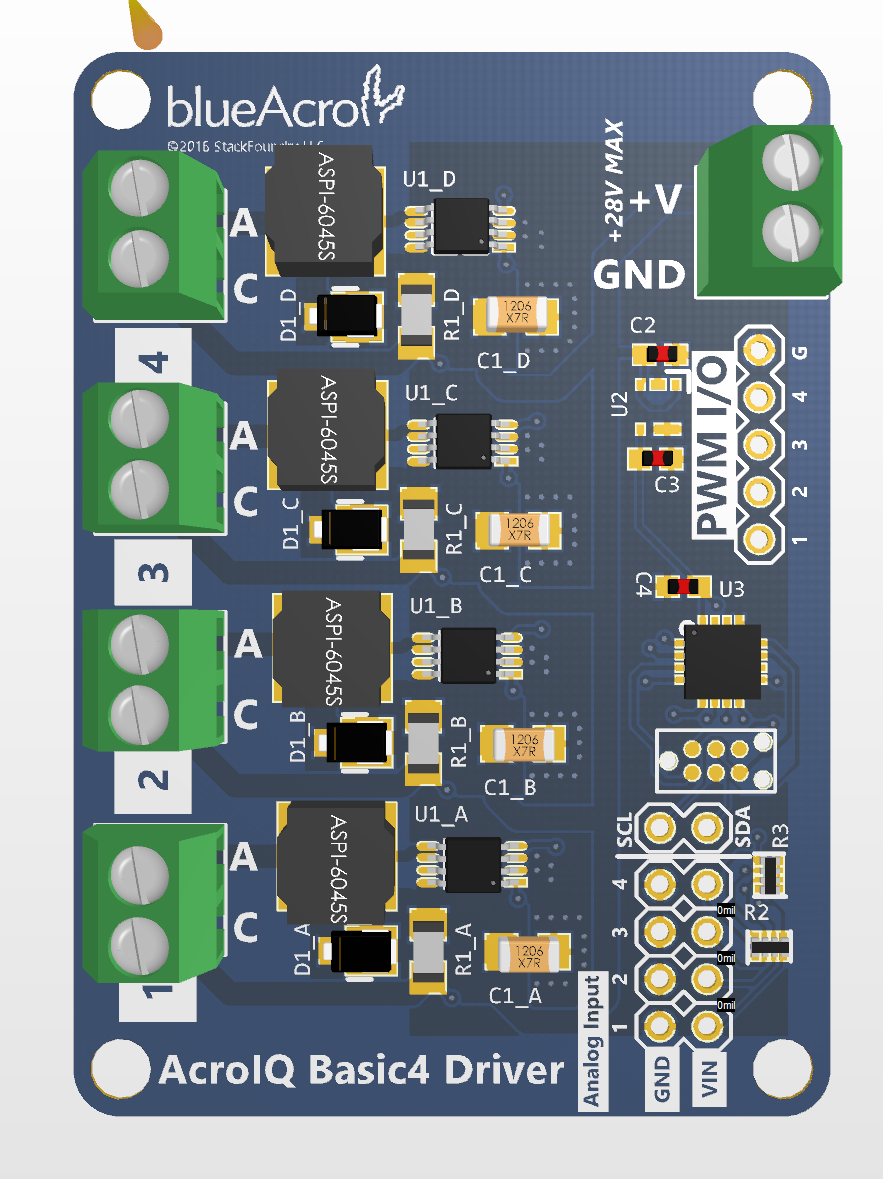
Two boards — 8 channels — came to about $25 in parts.
Luxeon Z stars
In parallel: Luxeon Z 3W emitters on a single star board for “as good as possible” light mixing. The Zs sit in a radial pattern with a pie-shaped copper pour per LED for thermals, sized to mount a Ledil Brooke Wide reflector, with push-in terminal blocks replacing hand-crimped connectors.
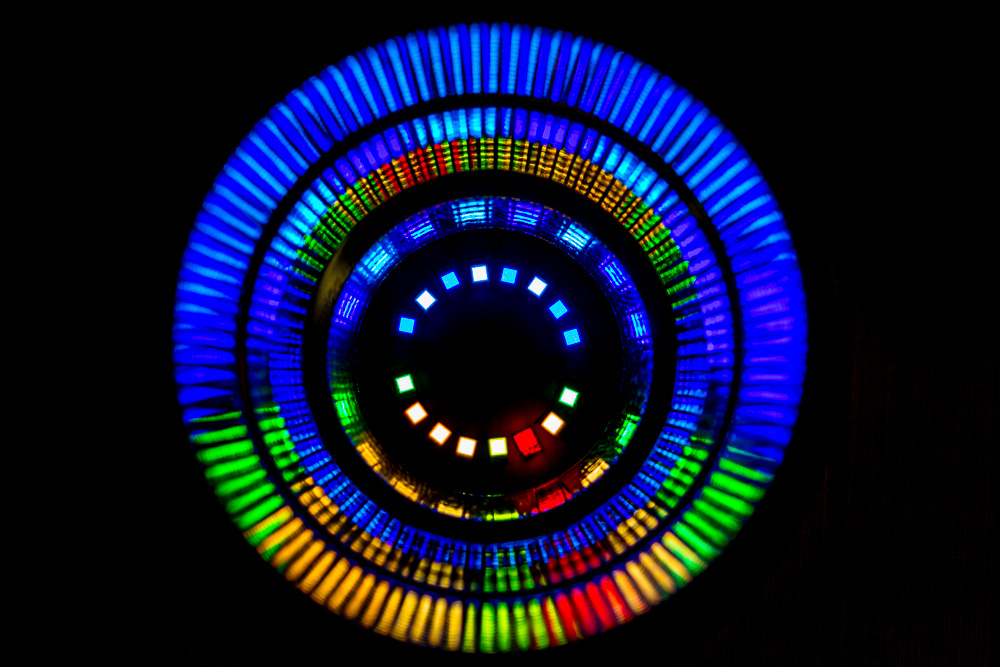
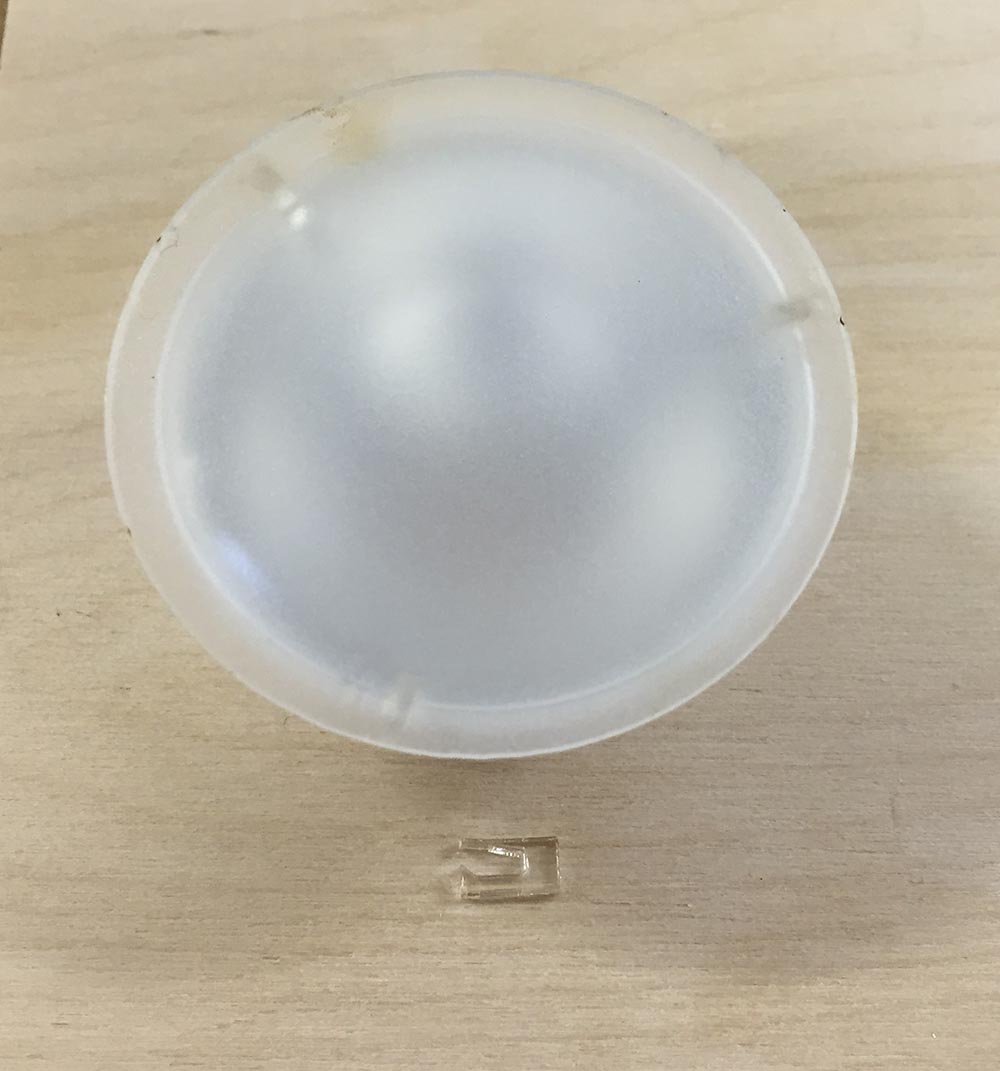
With a Satin Ice 89% acrylic diffuser on the reflector, the light is by far the softest of anything I’d built, with a marked intensity gain over bare LEDs. PAR on the Apogee SQ-500: 230 naked, 460 reflector + diffuser, 830 reflector alone.
The MicroDriver
And the concept that stuck: the MicroDriver — 2.6″×0.7″, 12–48V in, up to 1A per channel on the LM3414HV, current-adjustable 400mA–1A via trim-pot while being PWM dimmed. Best of both worlds.
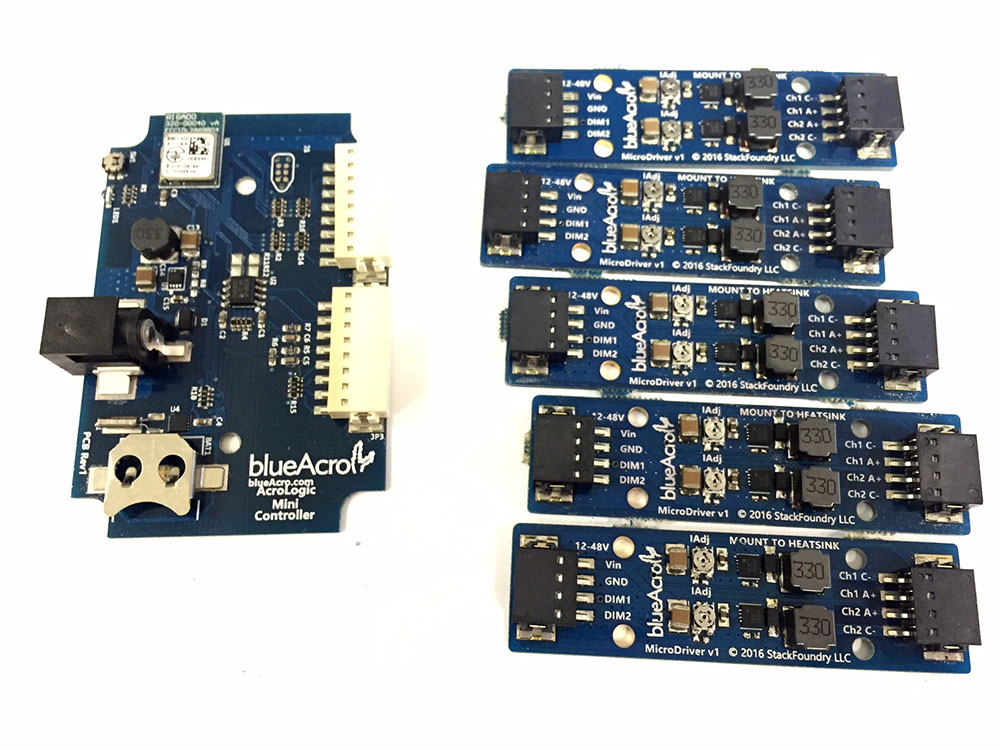
The board on the left is the Bluetooth PWM controller prototype — that story continued for years.
Originally posted to the LEDBrick thread on Reef2Reef.