The DCBuddy launch era, combined from my May–June 2024 updates to the thread.
Cases and thermals
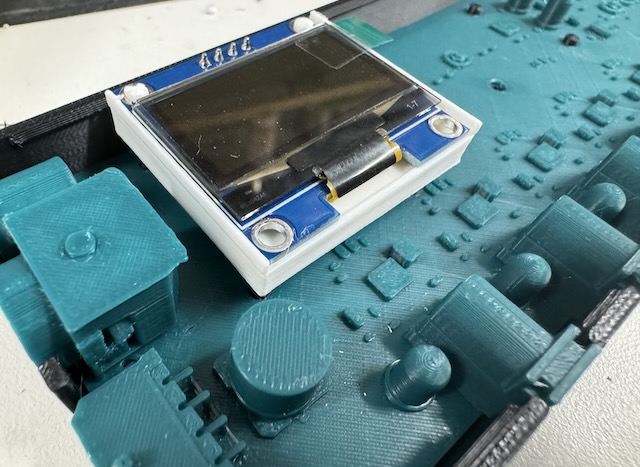
Case prototypes — and yes, I 3D-printed the entire board as a mockup. The biggest risk is thermals: more current, more heat. One parts change reduced logic-circuit power (the buck now runs down to 6.2V with linear regulators taking over), and stress testing was planned with seven DC loads at once.
The CAN transceiver post-mortem
I plugged two DCBuddys together over the 8-pin MicroFit module connector, and the CAN transceiver loudly blew a bit out of its top, dragging down the 3.3V rail. The straight-through cable meant a symmetric pinout put 24V/ground across CANH/CANL — and the transceiver was only rated to survive +14V.
Three lessons: the 8-pin layout can’t be made polarity-safe, the fix is a symmetrical 10-pin pinout (ground on the bottom row, +V on top, CANH/CANL in the center — every cable becomes polarity-independent, and more pins means more amps anyway), plus a hardier automotive-grade transceiver. Cost: a case tweak and a week or two of delay. Why CAN at all? Battery backup — when wall power is gone, WiFi orchestration may be too; the “on-battery” signal needs a wire.
Supplies, firmware, and the Split
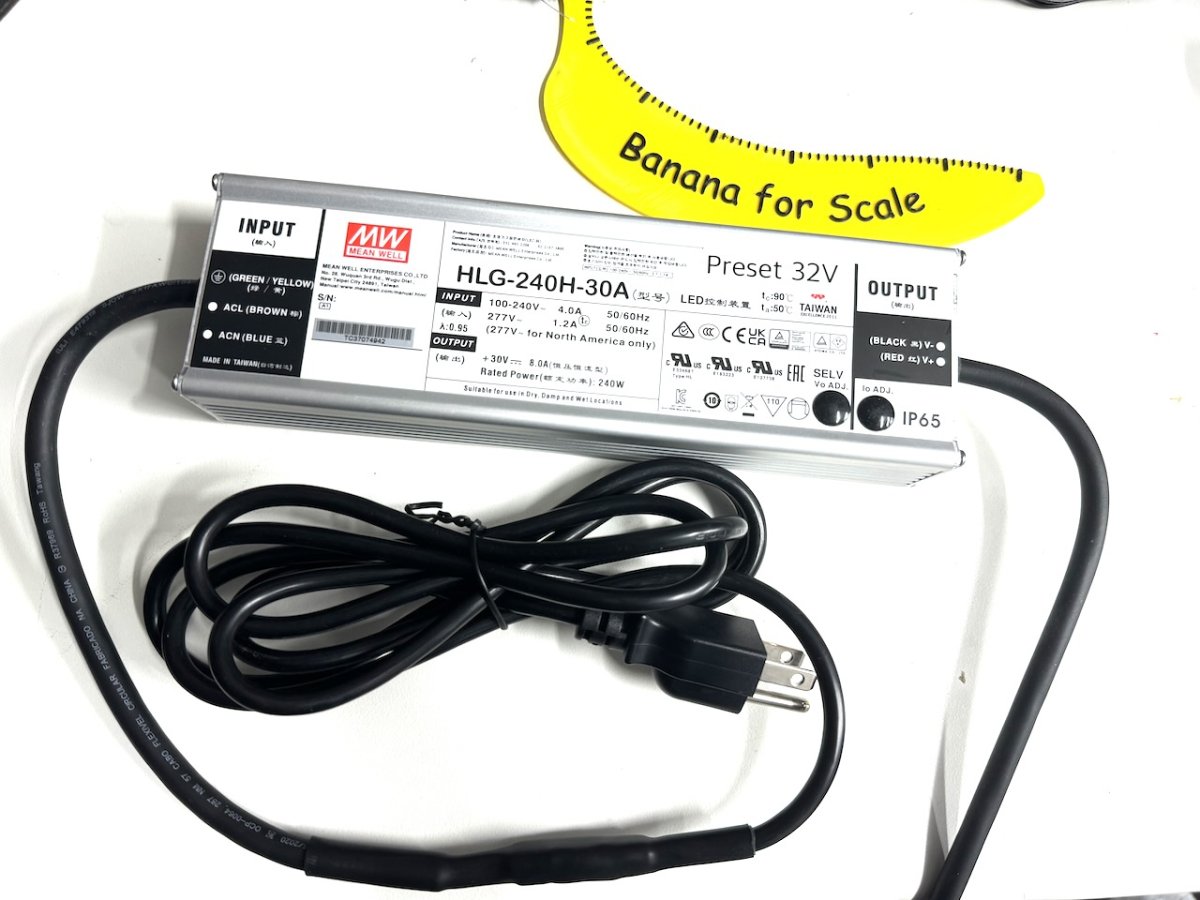
The 32V option came together with Meanwell HLG-240H-30A supplies hand-prepped with proper cords — Molex Perma-Seal butt splices under adhesive heat shrink, keeping two insulation levels and a damp rating:
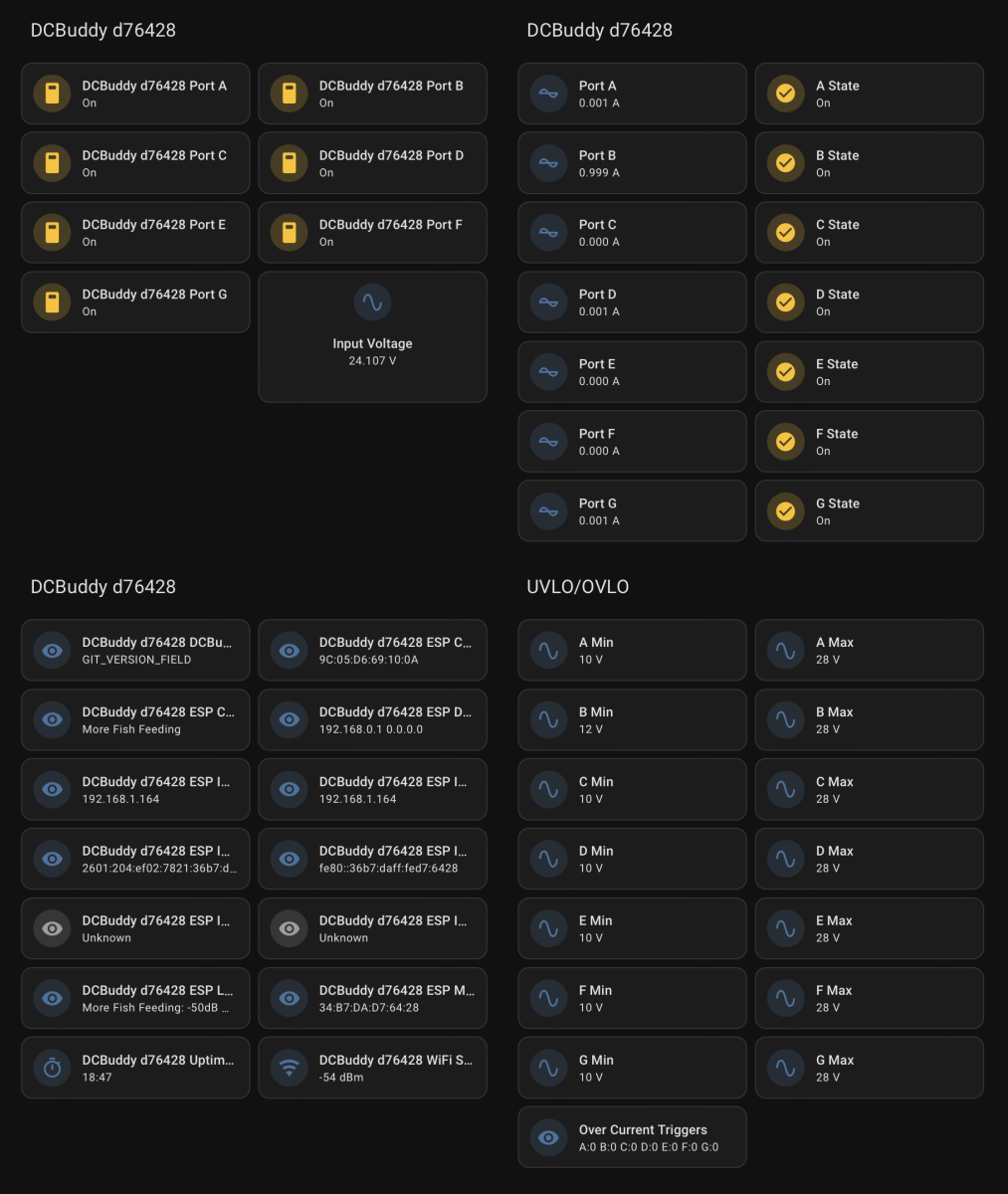
Firmware grew real features: staggered power-up (300ms minimum between ports), per-port overcurrent counters with a Home Assistant reset service, and over/under-voltage lockouts — so a diode-ORed 12V battery feed can automatically shut down non-EcoTech gear while VorTechs drop into battery limp mode. Overcurrent behavior: the port drops within milliseconds on a short, then retries every 7.5 seconds up to ten times, all visible in the open firmware.
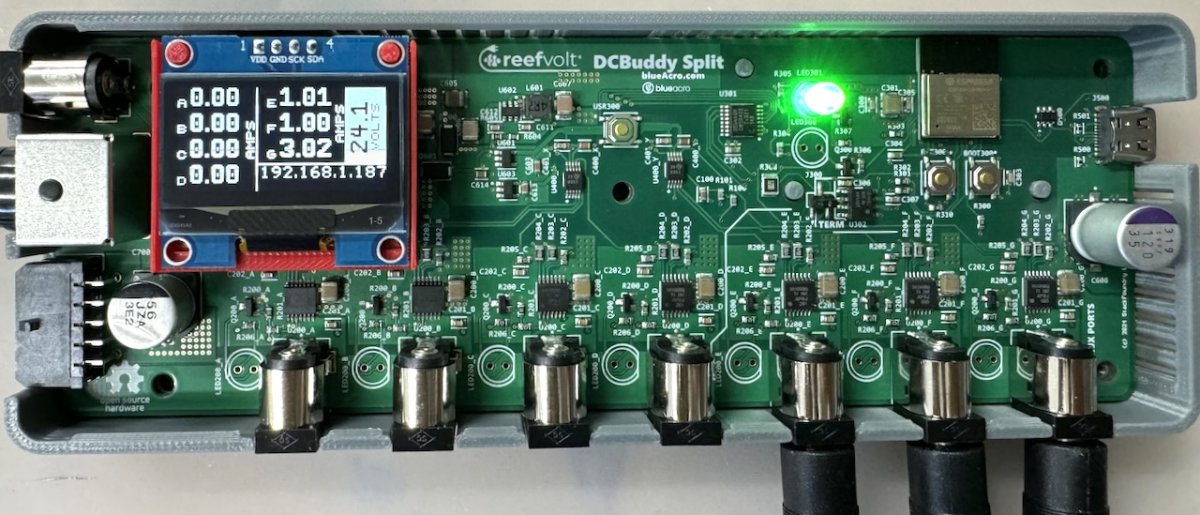
The DCBuddy Split (3× 12V ports) earned one honest derating from closed-case testing at 95°F ambient: 5A peaks are fine, but sustained 12V load is 4A — 5A plus logic load thermally trips the buck after about ten minutes.
The growing family
The “dumb” hub design ORs multiple supplies through LM5050-controlled MOSFET ideal diodes with automotive fuses per output — redundant same-voltage supplies, or a 12V battery mixed into a 24V/32V system:
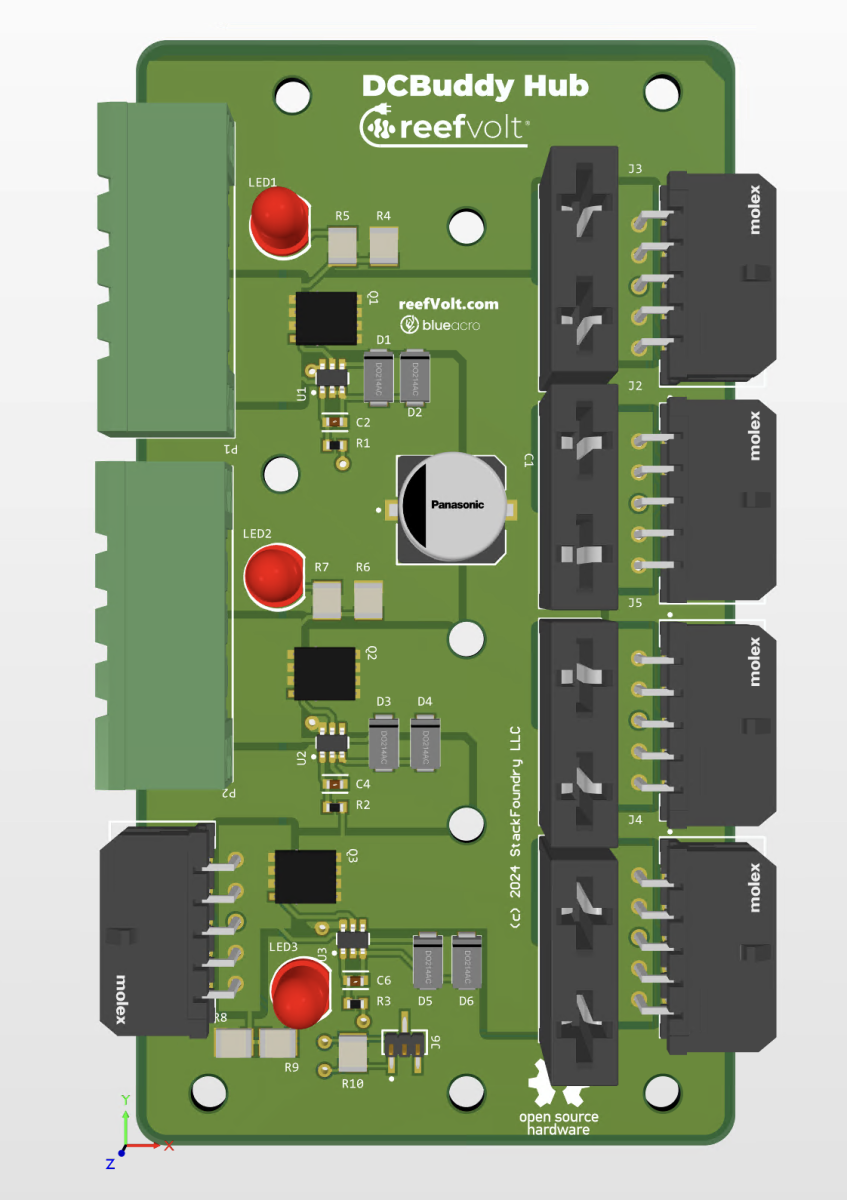
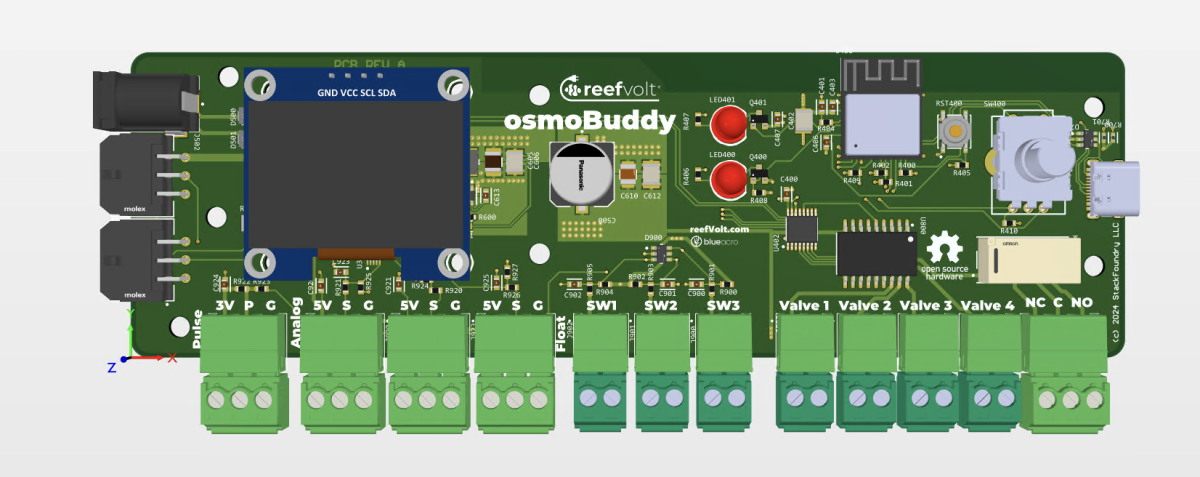
Also teased: the battery module (12–36V LiFePO4, BQ25756 smart charger, its own ESP32), an intelligent hub, a high-current HD model — and a reverse osmosis / auto-water-change controller to complete the Home Assistant hardware puzzle:
And with burn-in testing done, the first orders started getting shipment notices. Documentation at reefvolt.com.
Originally posted to the DCBuddy thread on Reef2Reef.